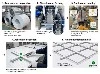


PVC-laminated gypsum ceiling panels are composite boards manufactured using paper-faced gypsum board as the substrate. The process involves surface gluing, hot-pressing lamination with PVC film, optional aluminum foil backing, cold or hot pressing for setting, and final trimming and inspection.
These panels are composed primarily of paper-faced gypsum board, PVC film, and aluminum foil, processed and bonded together using a scientific method that incorporates a six-sided waterproofing treatment. During production, a PVC film-featuring integrated graphics, text, and logos applied via screen printing-is laminated onto one side of the gypsum board, while aluminum foil is applied to the other, creating a composite ceiling material.
Substrate Pre-treatment: Select standard paper-faced gypsum board (typically 7–12 mm thick), clean dust from the surface, and ensure the facing paper is smooth and undamaged; perform sanding or additional dust removal if necessary.
Gluing Process: Evenly apply a water-based or solvent-based adhesive (such as white latex or a specialized laminating adhesive) to the front of the gypsum board; adhesive may be applied simultaneously to the back if laminating with aluminum foil. Control the adhesive quantity to prevent seepage or bubbling.
Film Preparation: Select PVC decorative film (formulated with plasticizers, stabilizers, color masterbatches, etc., and optionally pre-embossed with patterns) and cut it to the required specifications; some processes may require pre-heating for activation.
Hot-Press Lamination: The PVC film is applied to the adhesive-coated surface and bonded tightly through hot pressing using heated rollers (typically 80–120°C) and pressure rollers, causing the adhesive layer to melt and cure; aluminum foil lamination on the back side is performed simultaneously (if required).
Cooling and Setting: The panel passes through a cooling section to lower the temperature, relieving internal stresses and preventing shrinkage, deformation, or wrinkling.