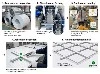


Fire rating standards for gypsum board ceilings are a critical aspect of architectural renovation, directly impacting a building's safety performance and service life.
In accordance with national standards and relevant industry specifications, the fire-resistance rating of gypsum board ceilings is primarily determined by their fire-resistance limit. These are generally categorized into four levels: Class A (non-combustible), Class B1 (flame-retardant/difficult to ignite), Class B2 (combustible), and Class B3 (highly flammable). However, practical architectural applications-particularly for ceiling systems-prioritize the use of Class A and Class B1 materials to ensure adequate fire safety. Class A fire-resistant gypsum board represents the highest grade; it typically offers a fire-resistance limit of at least three hours, meaning it can maintain structural integrity and prevent the spread of fire for that duration under standard fire test conditions.
Class A gypsum boards often incorporate high-density glass fiber reinforcement or special fire-retardant additives, making them suitable for environments with stringent fire safety requirements, such as high-rise buildings, underground spaces, and data centers. Class B1 fire-resistant gypsum board generally has a fire-resistance limit ranging from 0.5 to 3 hours, depending on the board's thickness and construction method.
1. Material Selection: Select gypsum boards that meet the relevant standards based on the building's intended use and fire-resistance rating requirements. For instance, Class A fire-resistant gypsum boards should be prioritized for high-rise buildings and critical public facilities.
2. Structural Design: The structural design of the suspended ceiling system must comply with fire compartmentation requirements, covering aspects such as framing spacing, joint treatment, and fire-stopping measures. A sound structural design effectively enhances the system's overall fire-resistance performance.
3. Installation and Construction: Construction must be carried out in strict accordance with specifications, ensuring secure board fixation, tight joints, and the absence of hollow spots. Attention must also be paid to the correct application of fire-stopping materials to prevent fire from spreading through gaps.
4. Inspection and Acceptance: Upon completion of the suspended ceiling system's installation, fire-resistance performance testing and acceptance inspections are required to verify that all parameters meet design specifications and relevant regulatory standards.