

✅ Material
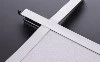
Light steel keel: Cold‑formed galvanized steel strip, metal framework.
Wood keel: Squared timber processed from pine, fir and other lumber.
✅ Fire, moisture & pest resistance
Light steel keel: Non‑combustible; moisture‑proof, mould‑resistant and termite‑proof. Suitable for wet areas, hotels, shopping malls and commercial projects, and meets strict fire codes.
Wood keel: Combustible. It swells, gets mouldy and attracts pests when damp. Even with fire‑retardant and preservative coating, its performance is limited; not recommended for permanently humid spaces.
✅ Stability & deformation
Light steel keel: High strength, low thermal expansion. Large‑span ceilings seldom sag or crack, with a much longer service life.
Wood keel: Highly affected by temperature and humidity. It shrinks and warps over time, often causing cracks at gypsum board joints and ceiling sagging.
✅ Flexibility for shapes
Light steel keel: Ideal for large flat or stepped ceilings; difficult for intricate curved or irregular shapes.
Wood keel: Easy to cut on site, highly malleable. Great for complex curves and artistic forms, and bonds well with other wooden elements.
✅ Cost & installation
Light steel keel: Higher material cost. Supplied with standard fittings for fast large‑scale installation; stronger load capacity for accessible ceilings.
Wood keel: Lower material cost. Flexible for on‑site cutting but more labour‑intensive; riskier for large continuous ceilings.
✅ Recommended applications
Light steel keel: Commercial projects, large ceilings, partition walls, damp locations, projects with strict fire requirements and long‑term durable ceilings.
Wood keel: Small local decorative sections in residential interiors, complex custom shapes and wood‑matching decorative framing.
If you are interested in our products or you have any project requirements recently, welcome to send us your inquiry!